

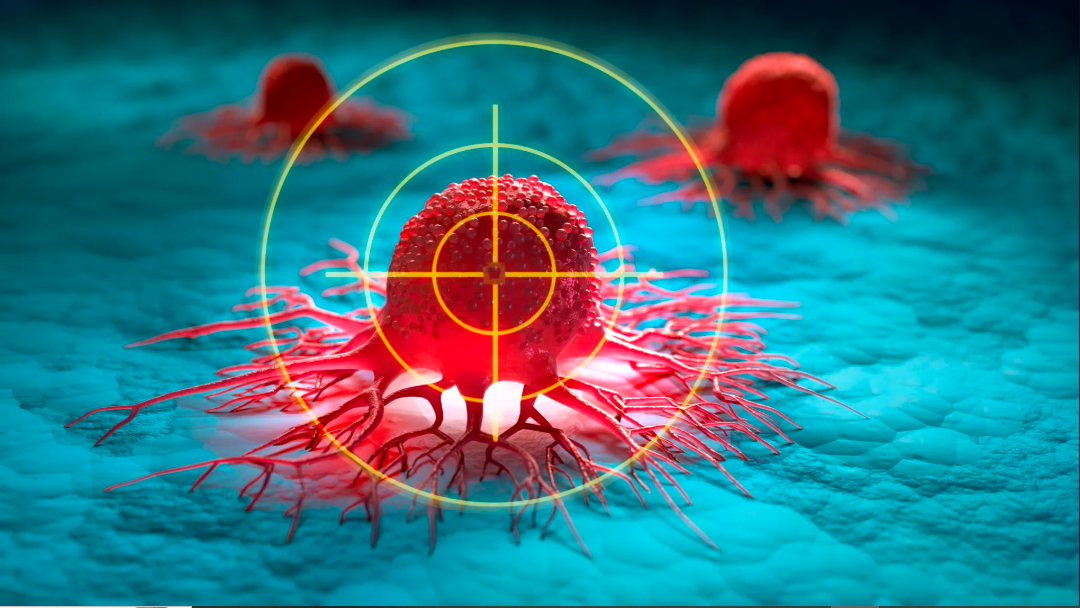
Astatine is the rarest naturally occurring element on Earth and among the least explored in the periodic table. True to its Greek name meaning “unstable,” it exists only fleetingly in nature. Yet scientists at Texas A&M University have found a way to harness its potential. Using cyclotron beams and advanced chemical techniques, they have created a method to produce, isolate, and ship astatine-211 (At-211), an isotope that — despite its instability and short 7.2-hour half-life — shows remarkable promise in targeted cancer treatment.
The “Goldilocks” Isotope for Cancer Therapy
At-211 is often called the “perfect” or “Goldilocks” isotope because it can deliver just the right amount of radiation to destroy cancer cells while leaving the surrounding tissue unharmed. This breakthrough isotope has demonstrated strong potential against blood cancers, ovarian tumors, and certain brain cancers. Within the Texas A&M Cyclotron Institute, scientists are producing At-211 using the K150 cyclotron with support from the U.S. Department of Energy (DOE) Isotope Program. Since 2023, Texas A&M has been one of only two national suppliers of astatine for targeted cancer therapy through the National Isotope Development Center (NIDC) and its University Isotope Network.
“Targeted alpha therapy is a potentially transformative cancer therapeutic of great interest due to its ability to cause large amounts of damage near a tumor cell while keeping the healthy surrounding tissue and organs intact,” said Texas A&M Distinguished Professor and Regents Professor of Chemistry Dr. Sherry J. Yennello, director of the Cyclotron Institute. “We are one of a handful of U.S. centers capable of routinely producing astatine in medically relevant quantities and delivering it to nearby facilities.”
Harnessing the Power of Alpha Particles
When astatine decays, it emits alpha particles — tiny clusters made of two protons and two neutrons — that can release powerful, localized bursts of energy. These alpha particles are highly effective in destroying cancer cells because they travel only a short distance before releasing their energy, minimizing damage to healthy tissue. When At-211 is positioned within or near tumors, its alpha emissions penetrate just deep enough to eliminate cancerous cells while sparing surrounding organs.
At-211’s short half-life also means it quickly loses its radioactivity, making it less toxic than longer-lived radiopharmaceuticals. Unlike many other isotopes, At-211 does not produce harmful secondary alpha decay, ensuring that its energy is used efficiently for therapy. This combination of precision and safety has drawn attention from researchers and pharmaceutical developers worldwide. It is already being tested in clinical trials for blood cancers and explored for potential use in treating Alzheimer’s disease.
“Astatine-211’s availability remains the biggest hurdle to harnessing its potential to transform the future of nuclear medicine,” Yennello said. “Fortunately, the advances we’re making here at Texas A&M will go a long way toward addressing that.”
Tags:
Subscribe To Get Update Latest Blog Post
No Credit Card Required

Pakistan Rang is a leading Digital Media Publisher delivering cutting-edge content across news, entertainment, education, healthcare, lifestyle, Sports, and technology. Our platform engages millions with timely stories and insightful analysis. Committed to quality journalism and innovation, we connect audiences with the information they need and the stories that inspire and inform.


